







Task Forces

TRA Task Force – Worker branch
Why?
The Worker TRA Task Force has been active since 2019, delivering projects that advance the scientific basis of the Worker Targeted Risk Assessment (TRA) tool. Its overarching objective is to e...
![Immunotoxicity assessment: Addressing Challenges and Advancing Methodologies [Workshop → Task Force]](https://www.ecetoc.org/wp-content/uploads/2026/07/Picture2-1024x923.jpg)
Immunotoxicity assessment: Addressing Challenges and Advancing Methodologies [Workshop → Task Force]
Why?
Regulatory assessment of immunotoxic properties of chemicals is a complex and challenging task
Limited regulatory guidance exists
Lack of industry and regulatory knowledge...

Chronic fish case studies towards an IATA
Why?
Hazard and safety assessments for the pelagic compartment often rely on in vivo studies using a single fish species, raising ethical concerns and uncertainty in terms of extrapolation....

Estimating the environmental release of Synthetic Polymeric Microparticles from Products
Why?
REACH restriction: SPM use restricted; emissions reporting required by May 2027.
Gap: No analytical methods available to measure SPM emissions.
Solution: Draft SPERC-based approac...

Case Studies on Reliability and Relevance Considerations during Validation of NAMs
Why?
Validation of NAMs is often overlooked despite its importance for regulatory use.
Traditional validation methods are less suitable for NAMs, which focus on key events rather than apical...

Advisory Panel: Case studies towards an Integrated Approach to Testing and Assessment (IATA) for chronic fish toxicity
Why?
Hazard and safety assessments for the pelagic compartment often rely on in vivo studies using a single fish species, raising ethical concerns and uncertainty in terms of extrapolation....

Good Practices in Omics Data Interpretation for Regulatory Applications
Why?
Current frameworks guide omics data generation and reporting but lack interpretation guidance for regulatory use.
Focus is on addressing this gap without duplicating ongoing efforts...
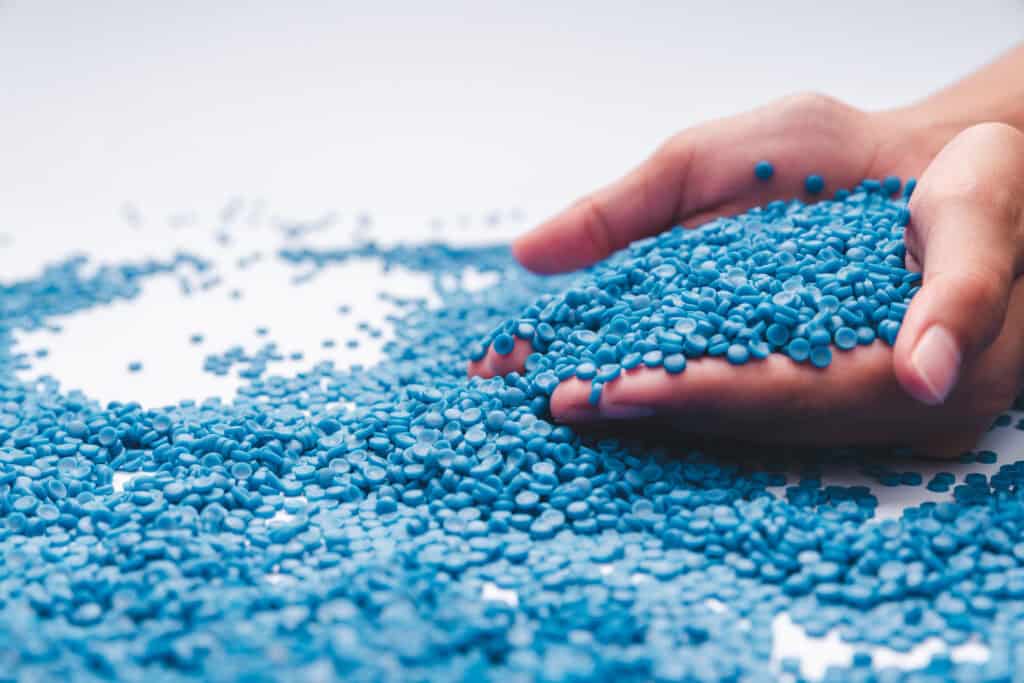
Plastic Additives – Chemical risk assessment in the linear and circular plastic economy
Why?
Plastic additives and plastic-associated chemicals are a topic of great interest for the negotiations of the Internationally Legal Binding Instrument to End Plastic Waste (‘ILBI’). Develop...

Polymer Analytics Task Force
Why
Polymers are best known as components of plastics; however, many other types of polymers exist as well, with joint estimates ranging from 70,000 to 400,000 polymers currently commercialized in...

Evaluation of a comparative safety assessment approach for products in the SSbD context
Dissemination
SETAC 2025, Europe 35th Annual Meeting, Poster: SETAC Europe 2025 - ECETOC Poster Safety Assessment Taskforce
Why
Stakeholders across various sectors, including industry and regulat...

State of the Science and Next Steps for Non-EATS Modalities (metabolic disorders)
Why
Future regulation may extend beyond EATS (estrogen, androgen, thyroid, steroidogenic) mediated ED
State of science on non-EATS modalities needs review.
How
Establish state of...

Scientific perspective on in vivo DNT testing
Why
Discussions are ongoing regarding the integration of developmental neuroxocixity (DNT) testing in chemical safety assessment in Europe (e.g. via inclusion of DNT cohorts in EOGRT studies (OECD...

Strategies to overcome challenges in aquatic testing of particulate material – Expert Group
Context
ECHA developed appendices to the guidance documents on data requirements under REACH specific to nanomaterials, including for guidance R7b (endpoint specific guidance covering ecotoxicity a...

Population relevance for NTOs per EU Endocrine Disruption Criteria – Expert Group
Why?
Technical guidance is still missing in response to EU scientific criteria for the determination of endocrine disrupting (ED) properties (ECHA & EFSA, 2018), to identify whether observed ad...

TRA Task Force – Environment branch
This Task Force is active on a number of initiatives:
A state of the science literature review on assessment of humans exposed indirectly via the environment, to ascertain the state of the s...

TRA Task Force – Consumer branch
This Task Force was established to carry out an in-depth evaluation of the TRA Consumer tool.A manuscript entitled An assessment of the ECETOC TRA Consumer tool performance as a screening level tool w...

TRA Task Force – Worker branch
This Task Force has been active since 2019 to conduct a review of published validation studies on the TRA Worker tool.A peer-reviewed publication (Urbanus et al., 2020) sets out the initial review...

Assessing risks to biodiversity from exposure to chemicals: where are we and where should we be going?
Why?
The EU commission is increasingly focusing on restoring and preserving biodiversity, as evidenced by several new strategic documents. EU Biodiversity strategy, Farm to Fork, and the EU...

Building knowledge from available degradation simulation studies: analysis of the most influential factors & development of a grouping approach
Background
Degradation simulation studies are complex and technically challenging. Additionally, they are used to evaluate a broad range of industrial chemicals, with increasing data/testing requir...

Substances that activate various liver receptors as endocrine disruptors
Why?
The current development of NAMs in the field of endocrine disruption (ED) is very active as the concept of ED is evolving in various areas of toxicology including liver toxicity/xenobiotic met...

Staged assessment: Exemplify the staged assessment process by using it to provide more information in low tonnage bands
Why?
The current paradigm for identifying data (study) requirements is based upon a surrogate of exposure, namely production volume, which may under or overestimate real exposure. As presented in ...

Smart studies: Examine how in vivo studies could provide more information encompassing novel studies (and endpoints)
Why?
“Smart” or extended studies can be defined as in vivo studies that employ additional or different endpoints from conventional studies.
They fall into 2 categories:
those that follo...

Use of clinical data in identification of respiratory sensitisers
Background
There has been a propensity by regulators to rely primarily on health surveillance/clinical case study data (case reports, clinical databases, worker exposure studies) to classify substa...

Inhalation Toxicological Properties of Low Soluble Particles and Their Relevance for C&L
Background
Poorly soluble particulate substances of low toxicity are progressively coming under intense regulatory pressure culminating in unjustified additional testing (see the extensive data pac...