




![Immunotoxicity assessment: Addressing Challenges and Advancing Methodologies [Workshop → Task Force]](https://www.ecetoc.org/wp-content/uploads/2026/07/Picture2-1024x923.jpg)



Scientific Committee News
The Scientific Committee is a central organ of ECETOC, meeting 6 times a year to peer-review and guide the work programme. ECETOC members have access online to detailed minutes of each meeting. It is the intention of this column to share key committee developments with a wider audience.

The Scientific Committee is a central organ of ECETOC, meeting 6 times a year to peer-review and guide the work programme. ECETOC members have access online to detailed minutes of each meeting. It is the intention of this column to share key committee developments with a wider audience.
Committee adopts “Guidance on Assessment Factors to Derive DNELs' report
In December, the Science Committee adopted a Technical Report on “Guidance on Assessment Factors to Derive DNELs' (derived no effect levels), subject to a few revisions and further editing. Prepared by a task force at short notice, the report lays out a practical basis by which industry will be able to refer to a science-based approach for consistent and reliable identification of suitable Assessment Factors (AFs).
A critical comparison of AFs contained in the REACH Technical Guidance Documents (TGD) with those identified in ECETOC Technical Report 86 (Derivation of Assessment Factors for Human Health Risk Assessment) has been undertaken, and the criteria been described for applying alternative ('informed') AFs, i.e. different to those contained the REACH TGD. Concerning the guidance on the derivation of DNELs based on human data, the conclusions from ECETOC Technical Report 104 (Framework for the Integration of Human and Animal Data in Chemical Risk Assessment) were taken into account. In addition, the report contains a number of worked case studies to show how the different approaches, i.e. assessment factors, can lead to different DNELs.
The finalised report will form the basis of a workshop to disseminate the DNEL guidance to a wider audience. The workshop will take place 25 March 2010 in Barza d'Ispra, Italy.
RiskBase project comes to an end
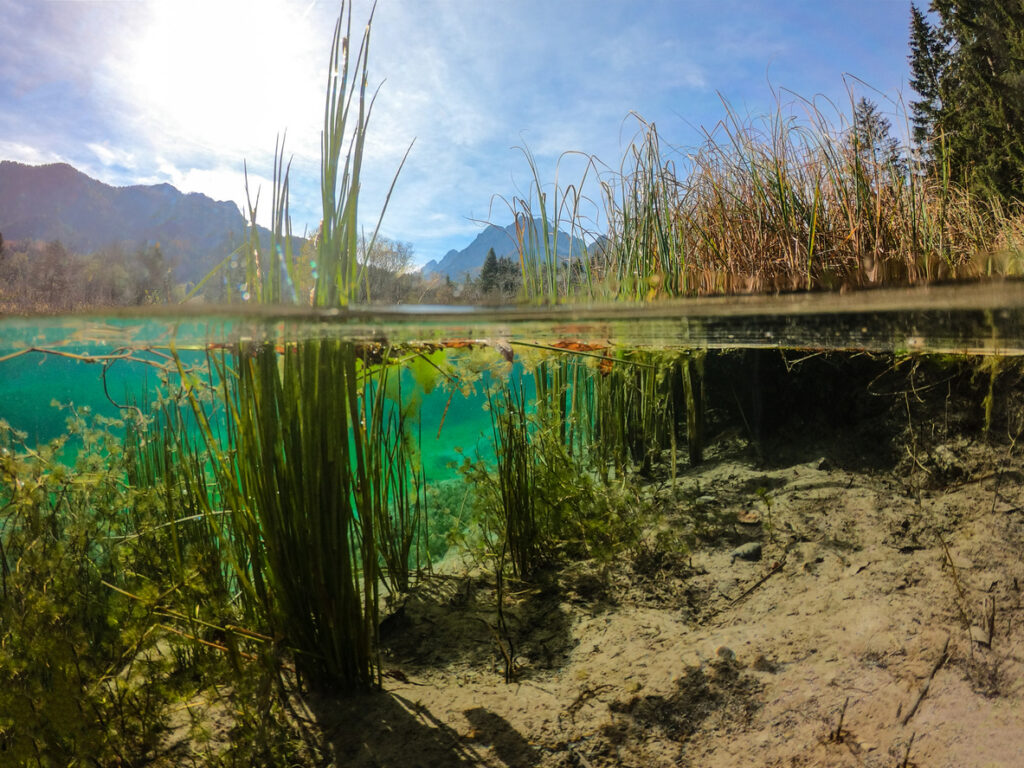
The FP6 project: “Towards Risk-Based Management of European River Basins (RiskBase)' has come to an end. Dr. Andrew Riddle (AstraZeneca) has represented ECETOC in the project's advisory board and has recently shared the final report on its deliverables.
RiskBase has aimed to review and synthesise the outcome of previous EU Framework Programme projects, and other major initiatives, on integrated risk-assessment based management of the (ground-) water-sediment-soil system at river basin scale. The final report of the project lays out key guiding principles for a risk-based management of river basins.
Dr. John Doe
Scientific Committee Chairman