
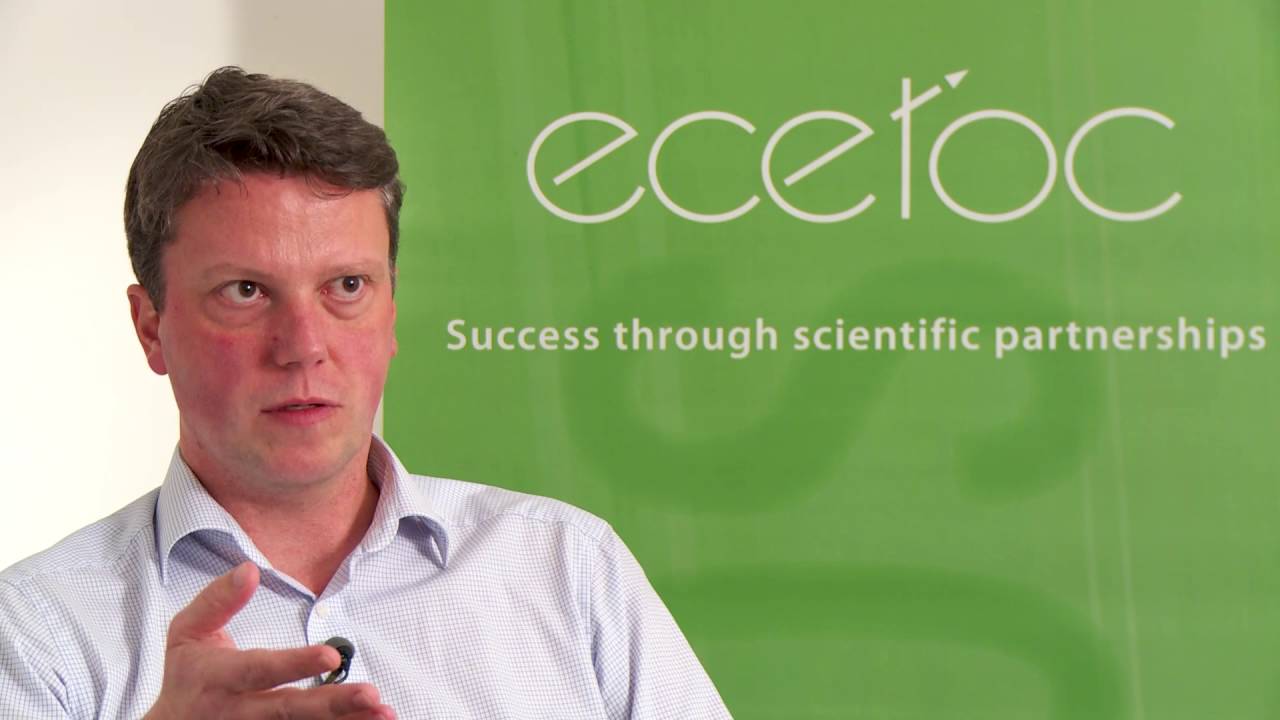





Welcome to Talia Neal-Walthall
390510

Welcome to Talia Neal-Walthall

We are pleased to welcome Talia Neal-Walthall to ECETOC as a secondee. Talia joins us to work on topics related to exposure, an area central to much of our current scientific programme. She will be wi...
September 2026 news from the Sec Gen
390509

September 2026 news from the Sec Gen

Dear members and colleagues,As we move through the year, there is a good deal to share. This has been a busy period for ECETOC, with changes to our team, our governance, and the work ahead. Let me...
HSSD Tool

HSSD Tool

This software was developed by a consortium of partners to facilitate the uptake of novel approaches to estimate aquatic threshold concentrations (e.g. the concentration at which 5% of the species are exposed above their EC50, HC5).
The Human Exposure Assessment Tools Database (heatDB)

The Human Exposure Assessment Tools Database (heatDB)

heatdb is a public directory of exposure data sources as well as available tools for exposure
NanoApp

NanoApp

ECETOC’s NanoApp is a tool designed to define the boundaries of sets of similar nanoforms and to generate a justification for the REACH registration.
Targeted Risk Assessment (TRA)

Targeted Risk Assessment (TRA)

The Targeted Risk Assessment (TRA) estimates exposures to workers, consumers and the environment that arise during a series of events.
TRA Task Force – Worker branch

TRA Task Force – Worker branch

Why? The Worker TRA Task Force has been active since 2019, delivering projects that advance the scientific basis of the Worker Targeted Risk Assessment (TRA) tool. Its overarching objective is to e...
Immunotoxicity assessment: Addressing Challenges and Advancing Methodologies [Workshop → Task Force]​

Immunotoxicity assessment: Addressing Challenges and Advancing Methodologies [Workshop → Task Force]​

Why?Regulatory assessment of immunotoxic properties of chemicals is a complex and challenging task​ Limited regulatory guidance exists​ Lack of industry and regulatory knowledge​...
Chronic fish case studies towards an IATA

Chronic fish case studies towards an IATA

Why?Hazard and safety assessments for the pelagic compartment often rely on in vivo studies using a single fish species, raising ethical concerns and uncertainty in terms of extrapolation....
Press Release
06.12.2013

Science Newsflash: Publication of ECETOC Workshop Report assessing Environmental Persistence

Brussels, December 2013

The ability of certain chemicals to persist in the environment is an issue of global concern that requires careful consideration in environmental risk assessment. This is especially true when this characteristic is coupled with bioaccumulative and toxicological properties. Assessing the persistence of chemicals substances in the environment is not straightforward since it cannot be measured directly. ECETOC has been actively involved in developing the scientific understanding of factors that affect the persistence of chemicals in the environment for over 15 years. The aim of this workshop, that attracted scientists from industry, regulatory agencies and academia from Europe and North America, was to review progress and output of research activities conducted in the last 6 years and to plan future research programmes which will contribute further to chemical safety and the risk assessment of chemical substances.

Using evidence from a number of laboratory studies and regulators experiences of persistency assessments made in the initial phases of REACH, the participants of the workshop concluded that good progress is being made but there are still significant challenges in developing appropriate techniques to assess the persistence of both single and complex substances.

The information and ideas developed at the Workshop adds to the knowledge base that will ultimately result in improvements in human and environmental risk assessment.

A description and the findings of the Workshop can be found in ECETOC Workshop Report no.24, Assessing Environmental Persistence.

ECETOC is Europe‘s leading industry association for developing and promoting top-quality science in human and environmental risk assessment of chemicals.